
From the geological survey to the water users' committee: the stages, cost and maintenance guarantee of a well project.
Bringing clean water to a village is far more than taking a drilling rig there. After the experience of 96 wells, we summarise the process in four stages: survey, drilling, handover and operation. The average total time is 90 days.
1. Survey and village selection (weeks 1-3)
Our local partner visits the village with a geology expert. The depth of the water table, the quality of existing sources and the village population are examined. Priority goes to villages that will serve at least 400 people, whose furthest water source is over 2 km away and which have a school. A written protocol is signed with the village headman and elders: the well belongs to the village in common.
2. Drilling (weeks 4-8)
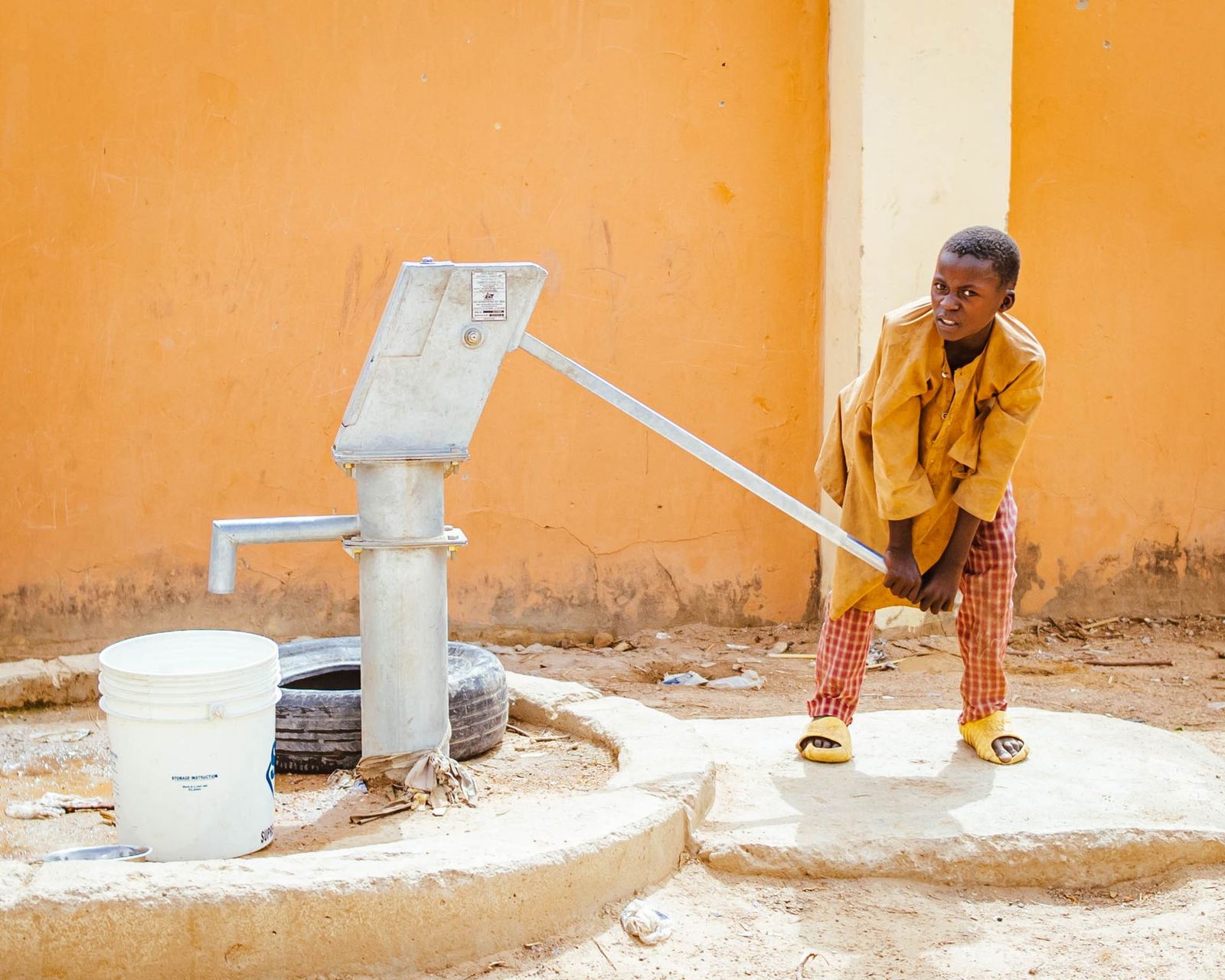
The borehole reaches an average depth of 60-100 metres. Flow, salinity and bacteriological quality are tested in a laboratory. If the results are unsuitable a second point is tried; this risk is built into the budget from the start. A solar pump, a covered reinforced concrete platform and a 5,000-litre tank are installed.
3. Handover and training (weeks 9-12)
A five-person water users' committee chosen from villagers is trained in pump maintenance, filter cleaning and simple repairs. The committee collects a small monthly maintenance contribution per household; this fund is for spare parts. On opening day the well's GPS coordinates are recorded and an illustrated report is sent to donors.
4. Operation and maintenance (5 years)
Every year a field technician visits the well, measures water quality again and meets the committee. Of the wells we have opened so far, 94% are still working after five years; the rest were repaired and brought back into service.
Cost
A full well costs about 195,000 TRY and serves an average of 600 people. With the share model you can contribute from 2,000 TRY. In a village, water means more than health: it means girls staying in school and time back in women's day.
A note from the field
A colleague who attended a well opening in a village in the Tahoua region last year relayed what the village's oldest woman said at the moment the water first flowed: "Water is no longer something you walk to; it comes to you." Once village women no longer spent four hours every morning carrying water, the enrolment rate of girls rose noticeably within the first year. That is why we count well projects as part of our education programme and also measure school attendance one year after each opening.